Spinning Jenny Drawing
Spinning Jenny Drawing - Roll eight paper tubes the same diameter as a pen. Roll the paper from bottom to top, forming a tight tube. Web built in the late 18th century, this spinning jenny is a reminder of the role of women in the establishment of one of new paltz’s successful families. A photograph of the jean hasbrouck house where the jenny is located. Web the spinning jenny was invented by a weaver named james hargreaves, of lancashire, england, circa 1764. The machine used eight spindles onto which the thread was spun from a corresponding set of rovings. Web manuscript/mixed material spinning jenny, 1812, drawing. Web hargreaves’ jenny and arkwright’s frame differed fundamentally in the relationship between the process of spinning — drawing out the fibres and twisting them into yarn — and the process of winding — collecting the yarn on a spool once spun. Web the spinning jenny is a historic spinning machine that was invented during the industrial revolution in the late 18th century. It was a very simple affair, but it spun at first eight threads then sixteen, and within the inventor’s own lifetime eighty, thus doing the work of many spinning wheels.—webster, 1920. With its ability to spin multiple threads at once, this hand. The inventor was james hargreaves, an englishman. Lay a sheet of paper on a flat surface horizontally. Web manuscript/mixed material spinning jenny, 1812, drawing. It was a very simple affair, but it spun at first eight threads then sixteen, and within the inventor’s own lifetime eighty, thus doing the work of many spinning wheels.—webster, 1920. In 1770, james hargreaves invented a machine that was about to forever change the destiny of the textile industry within europe, and subsequently america in 1820. Want to search our collection? The machine used eight spindles onto which the thread was spun from a corresponding set of rovings. Web built in the late 18th century, this spinning jenny is a reminder of the role of women in the establishment of one of new paltz’s successful families. It revolutionized the process of spinning yarn by allowing a single operator to spin multiple threads simultaneously. Web the spinning jenny is a historic spinning machine that was invented during the industrial revolution in the late 18th century. It decreased production costs, encouraged the movement of textile production into factories, and eventually led to more advanced technologies, such as samuel crompton’s. A photograph of the jean hasbrouck house where the jenny is located. Web manuscript/mixed material spinning. With its ability to spin multiple threads at once, this hand. Lay a sheet of paper on a flat surface horizontally. The machine used eight spindles onto which the thread was spun from a corresponding set of rovings. It meant that a spinner could produce more yarn at a time of increased demand. Web hargreaves’ jenny and arkwright’s frame differed. Invented by james hargreaves in the 1760s, this machine changed the game by allowing a single person. It decreased production costs, encouraged the movement of textile production into factories, and eventually led to more advanced technologies, such as samuel crompton’s. It was a very simple affair, but it spun at first eight threads then sixteen, and within the inventor’s own. Web a model of a spinning jenny. Web “this machine carried a number of spindles turned by cords or belts from the same wheel, and operated by hand. Web hargreaves’ jenny and arkwright’s frame differed fundamentally in the relationship between the process of spinning — drawing out the fibres and twisting them into yarn — and the process of winding. Roll eight paper tubes the same diameter as a pen. By turning a single wheel, the operator could now spin eight threads at once. It meant that a spinner could produce more yarn at a time of increased demand. The machine ('jenny') was capable of spinning multiple threads simultaneously and was one of the first important inventions in the textile. The machine used eight spindles onto which the thread was spun from a corresponding set of rovings. The inventor was james hargreaves, an englishman. A photograph of the jean hasbrouck house where the jenny is located. Invented by james hargreaves in the 1760s, this machine changed the game by allowing a single person. In 1770, james hargreaves invented a machine. Web designed by james hargreaves in 1764 or 1765, the spinning jenny was one of the crucial inventions in the textile industry during the industrial revolution. Spread glue over the entire surface of the paper. Web built in the late 18th century, this spinning jenny is a reminder of the role of women in the establishment of one of new. With its ability to spin multiple threads at once, this hand. In 1770, james hargreaves invented a machine that was about to forever change the destiny of the textile industry within europe, and subsequently america in 1820. Web “this machine carried a number of spindles turned by cords or belts from the same wheel, and operated by hand. Web built. Invented by james hargreaves in the 1760s, this machine changed the game by allowing a single person. The machine used eight spindles onto which the thread was spun from a corresponding set of rovings. Web step back in time and witness the revolution of textile production with the spinning jenny! Web in 1764 iliterate english weaver and carpenter james hargreaves. By turning a single wheel, the operator could now spin eight threads at once. Web step back in time and witness the revolution of textile production with the spinning jenny! Web a model of a spinning jenny. In 1770, james hargreaves invented a machine that was about to forever change the destiny of the textile industry within europe, and subsequently. Roll the paper from bottom to top, forming a tight tube. A photograph of the jean hasbrouck house where the jenny is located. Web designed by james hargreaves in 1764 or 1765, the spinning jenny was one of the crucial inventions in the textile industry during the industrial revolution. Invented by james hargreaves in the 1760s, this machine changed the game by allowing a single person. Spread glue over the entire surface of the paper. Web the spinning wheel, which made only one thread at a time, was displaced by the spinning jenny, on which twenty, fifty, a hundred, and even a thousand threads can be spun at once. Web a model of a spinning jenny. Web step back in time and witness the revolution of textile production with the spinning jenny! By turning a single wheel, the operator could now spin eight threads at once. Web built in the late 18th century, this spinning jenny is a reminder of the role of women in the establishment of one of new paltz’s successful families. The machine ('jenny') was capable of spinning multiple threads simultaneously and was one of the first important inventions in the textile industry in the british industrial revolution. 128 mm x 157 mm. It revolutionized the process of spinning yarn by allowing a single operator to spin multiple threads simultaneously. Web manuscript/mixed material spinning jenny, 1812, drawing. Web in 1764 iliterate english weaver and carpenter james hargreaves (hargraves) of blackburn, lancashire, england invented the spinning jenny, which spun eight threads simultaneously, reducing the amount of work needed to produce yarn. In 1770, james hargreaves invented a machine that was about to forever change the destiny of the textile industry within europe, and subsequently america in 1820.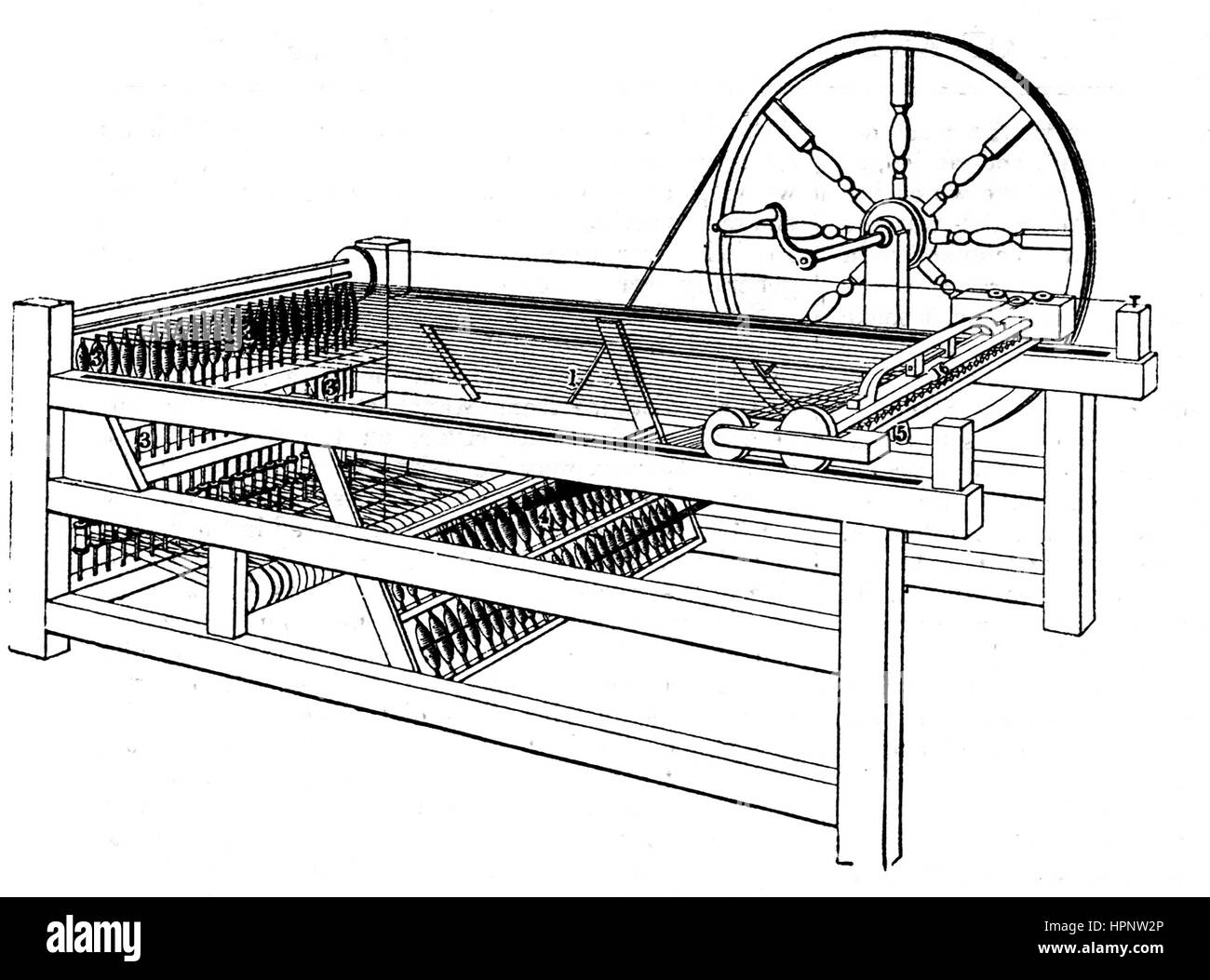
Spinning jenny hires stock photography and images Alamy
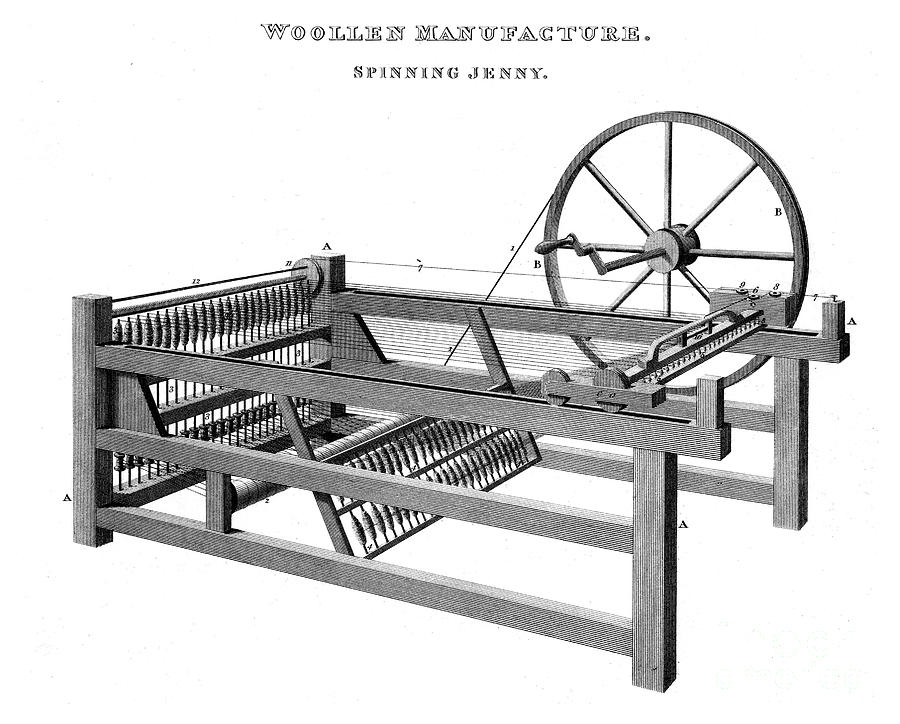
Spinning Jenny, 1820 by Print Collector
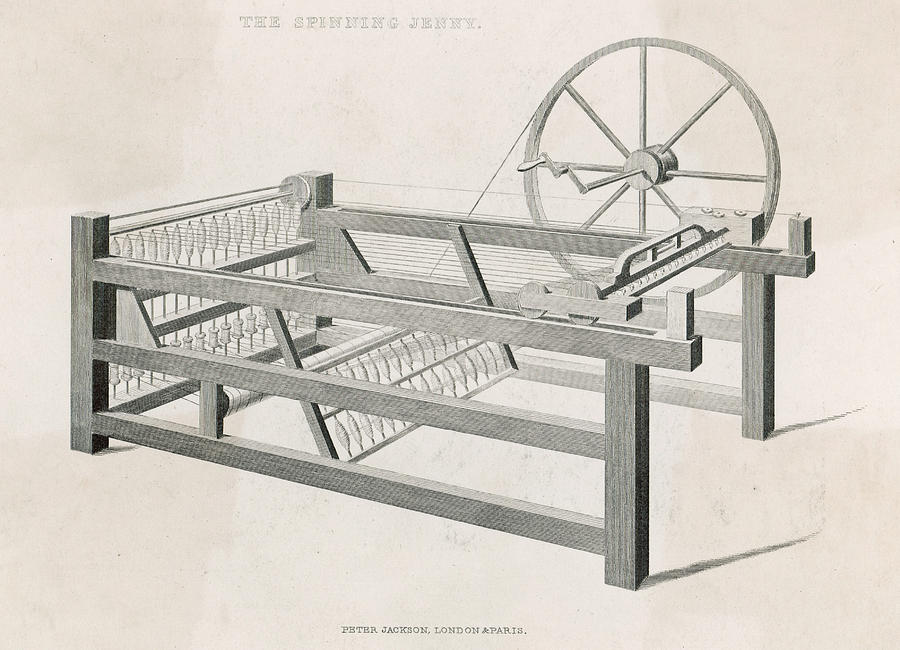
Hargreaves' Spinning Jenny James Drawing by Mary Evans Picture Library

The Spinning Jenny, Vintage Illustration Cartoon Vector CartoonDealer
![Spinning Jenny [image 1686x997 pixels 75]](http://www.fromoldbooks.org/Antisell-HandbookOfTheUsefulArts/pages/109-Spinning-Jenny/109-Spinning-Jenny-q75-1686x997.jpg)
Spinning Jenny [image 1686x997 pixels 75]

Arkwrights Spinning Jenny, 1769, 1769, (1904) Stock Image C040/9243
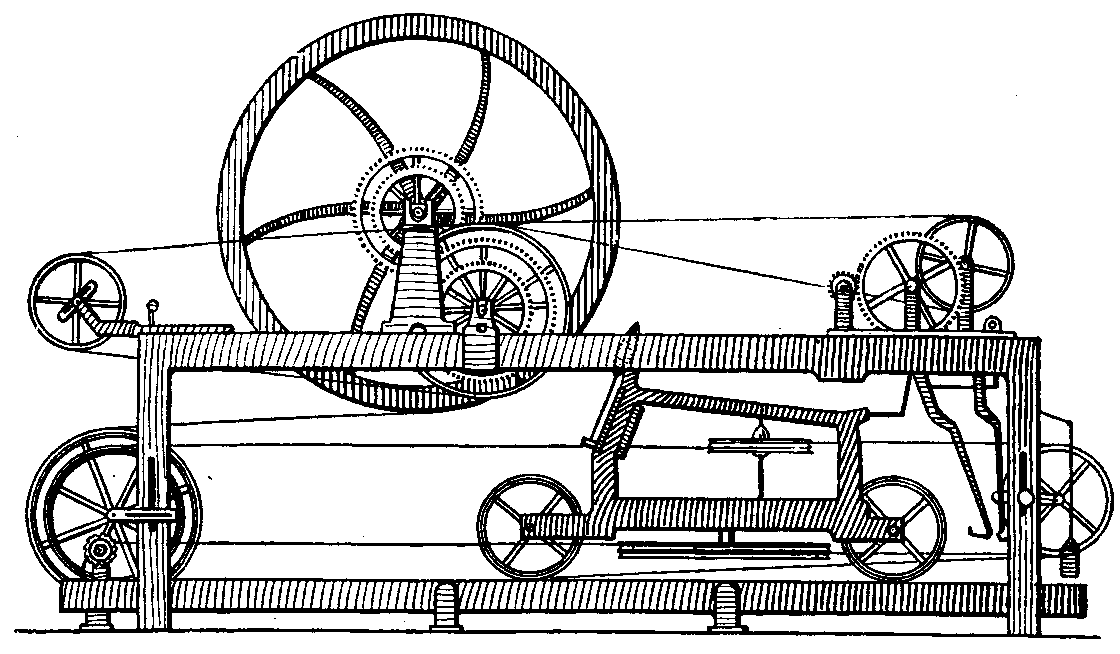
The original Spinning Jenny sketch.
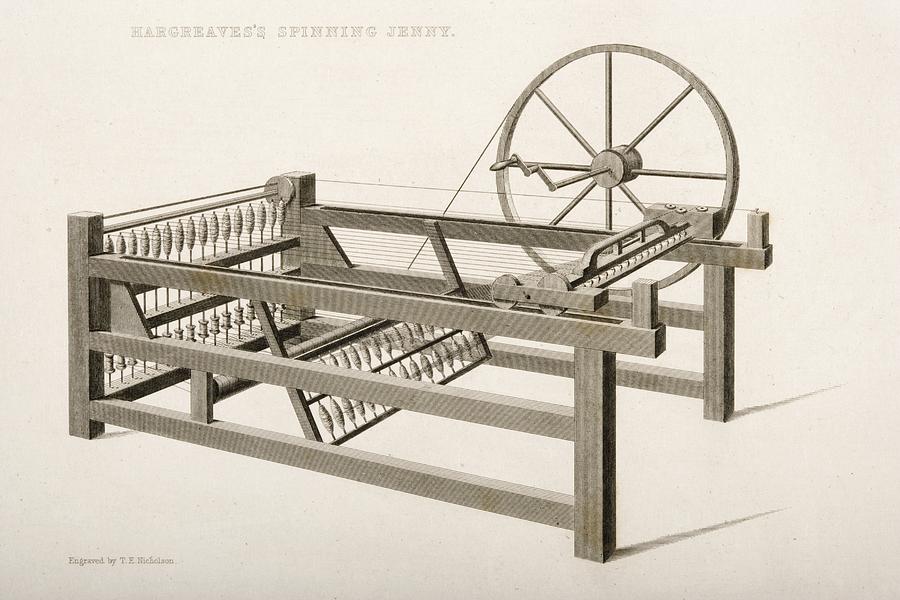
Hargreave S Spinning Jenny. Engraved By Drawing by Vintage Design Pics
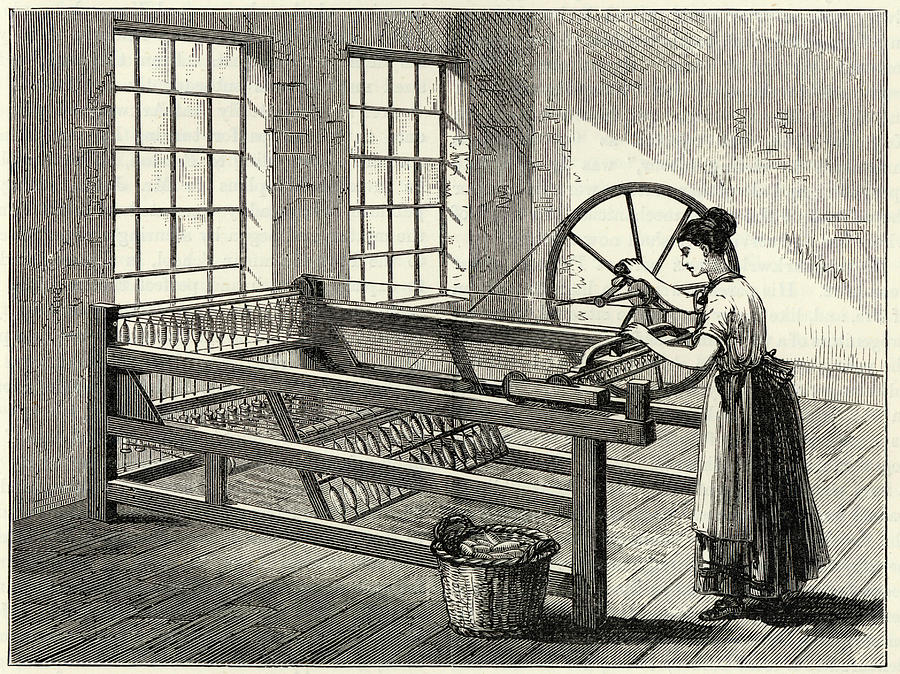
Hargreaves' Spinning Jenny James Drawing by Mary Evans Picture Library
Spinning Jenny ClipArt ETC
The Machine Protagonist Of This Essay Is Spinning Jenny.
Web Hargreaves’ Jenny And Arkwright’s Frame Differed Fundamentally In The Relationship Between The Process Of Spinning — Drawing Out The Fibres And Twisting Them Into Yarn — And The Process Of Winding — Collecting The Yarn On A Spool Once Spun.
It Decreased Production Costs, Encouraged The Movement Of Textile Production Into Factories, And Eventually Led To More Advanced Technologies, Such As Samuel Crompton’s.
The Machine Used Eight Spindles Onto Which The Thread Was Spun From A Corresponding Set Of Rovings.
Related Post: